
Kitchen Renovation London 2026: Complete Cost Guide & Expert Insights

Table of Contents
- Introduction: London Kitchen Trends 2026
- Complete Pricing Breakdown by Tier
- Detailed Component Cost Table
- Borough-Specific Pricing Insights
- Hidden Costs & Budget Planning
- ROI & Property Value Impact
- Timeline & Renovation Process
- Planning Permission & Building Regulations
- 2026 Design Trends
- How to Choose a Renovation Company
- Money-Saving Tips
- Frequently Asked Questions
Introduction: London Kitchen Trends 2026
Look, I get it. Kitchen renovations are a big deal, especially in London where property prices are already eye-watering. But here's the thing – everyone's renovating their kitchens right now. Seriously, we've seen demand jump by over 40% since 2024. And honestly? It makes sense. A really good kitchen doesn't just make your life better – it can actually add 5-8% to your property's value. That's not just me saying it, that's what estate agents are seeing across London.
At ATC, we've done over 30+ kitchens in London just this past year. And I know what you're thinking – "that sounds like a lot of kitchens" – and yeah, it is. But here's what I'm really proud of: we can do most kitchens in 7-10 days. I know, it sounds nuts, but we've figured out how to make it work without cutting corners. Whether you've got a Victorian terrace in Camden that needs some serious work, a period place in Kensington (hello, conservation officers), or a sleek apartment in Canary Wharf, I'm going to walk you through what this actually costs.
Real talk? Costs have gone up about 12% since 2024. Materials are pricier, good builders are harder to find, and everyone wants the nice stuff. But here's what I've learned doing this for years – if you plan smart and choose the right team, you can still get an amazing kitchen without remortgaging your soul. This guide is basically everything I'd tell a friend who's about to start this journey. No marketing fluff, just honest numbers and things I wish I'd known when I started.
Why Listen to Us? We're a family business – literally, three generations of builders. We've got all the certifications (Matilda's Blanket, all that stuff), and we maintain a 4.9/5 rating because we actually care about getting it right. We're not corporate, we're not flashy – we just know how to build good kitchens on time and on budget. And in London, that's actually pretty rare.
Get Your Free Kitchen Cost Estimate
Complete Pricing Breakdown by Tier
Here's the deal – there are basically three levels of kitchen renovation, and which one you pick depends on your situation. Got a buy-to-let that just needs to look decent? Different budget than a family home you're planning to live in forever. I'm going to break down the three tiers we see most often, so you know what you're actually paying for.
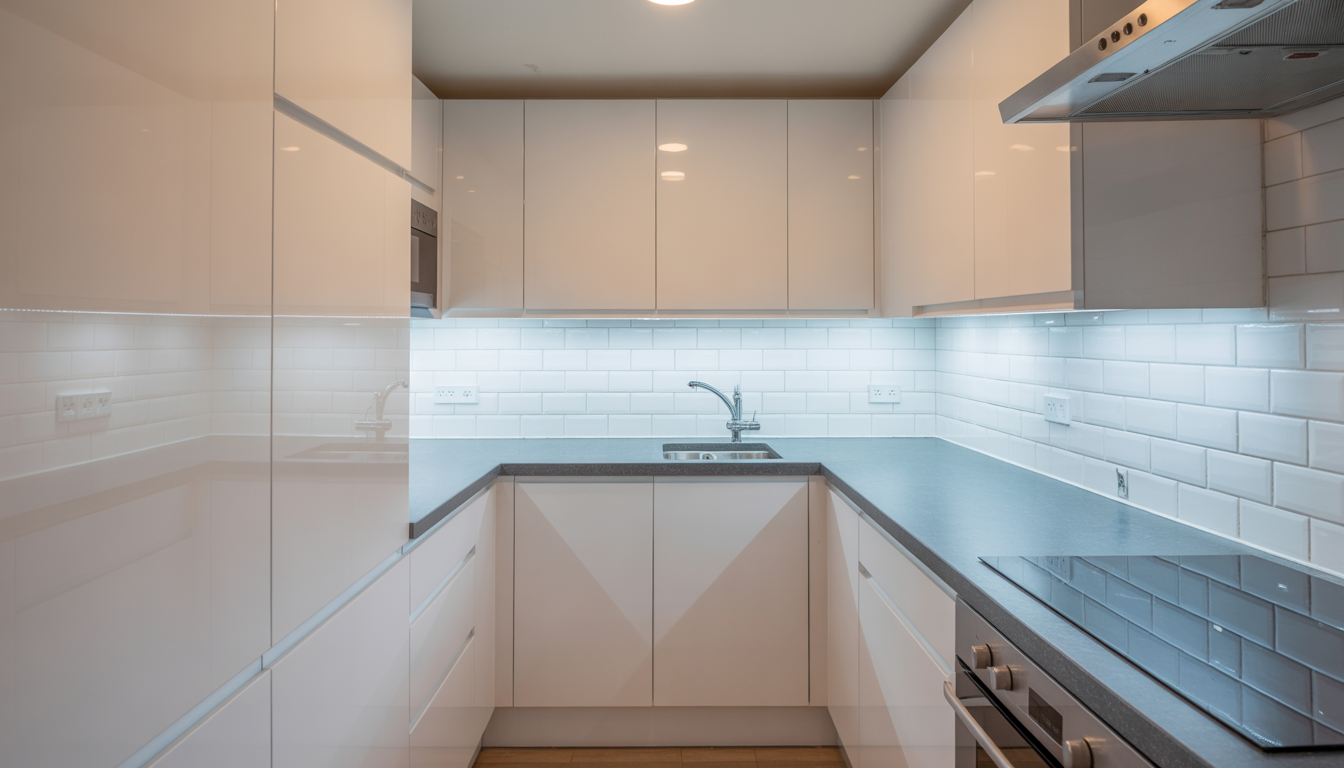
Budget-Conscious
£12,000 - £20,000
- ✓Standard IKEA or Howdens units
- ✓Laminate or basic quartz worktops
- ✓Mid-range integrated appliances
- ✓Basic LED lighting
- ✓Standard vinyl or laminate flooring
- ✓Simple tile backsplash
- ✓2-3 week installation timeline
Perfect for: Buy-to-let properties, first-time buyers, rental homes
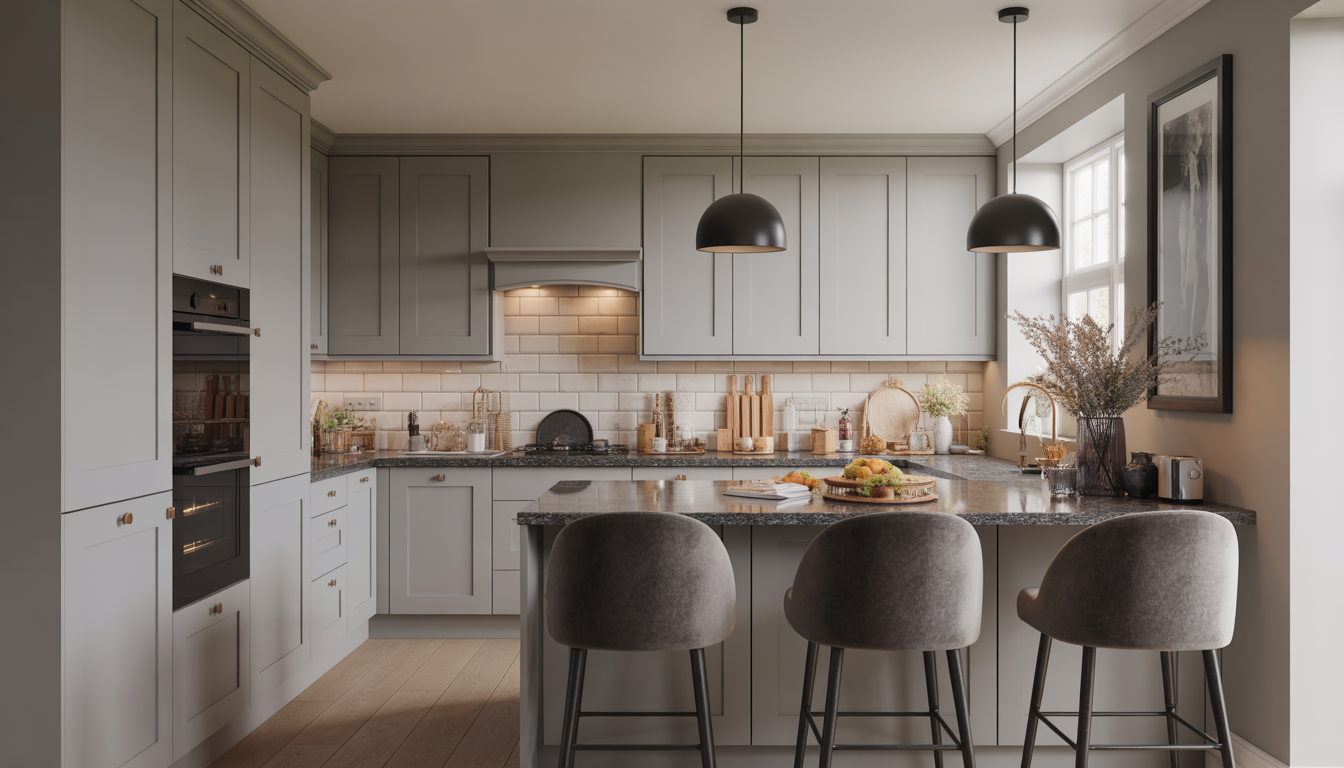
Premium Quality
£25,000 - £45,000
- ✓Semi-bespoke cabinetry (Howdens Pro/Magnet)
- ✓Premium quartz or granite worktops
- ✓Bosch/Siemens integrated appliances
- ✓Designer lighting & under-cabinet LEDs
- ✓Engineered wood or quality porcelain tiles
- ✓Feature backsplash (metro/subway tiles)
- ✓Smart storage solutions
- ✓Soft-close drawers and doors
- ✓3-5 week installation timeline
Perfect for: Family homes, modern living spaces, long-term residences

Luxury Bespoke
£50,000 - £80,000+
- ✓Fully custom German/Italian kitchens
- ✓Poggenpohl, SieMatic, or Bulthaup brands
- ✓Premium marble or engineered stone
- ✓Miele, Gaggenau, or Sub-Zero appliances
- ✓Wine coolers and steam ovens
- ✓Architectural LED lighting systems
- ✓Herringbone solid wood or luxury tiles
- ✓Bespoke storage and organizational systems
- ✓Smart home integration
- ✓6-10 week installation timeline
Perfect for: High-end properties, Kensington/Chelsea homes, luxury apartments
What Actually Makes It Cost More or Less?
Okay, so obviously a bigger kitchen costs more than a smaller one. A tiny galley kitchen (like 8-10 sqm) is going to be way cheaper than some massive open-plan thing (25+ sqm). But here's what most people don't realize – size is just the start.
Want to move stuff around? That's where it gets expensive. If you keep everything where it is and just swap out the units, you're golden. But move your sink to the other side? That's new plumbing, mate. That's £2,000-£5,000 right there. Same with relocating your cooker or dishwasher. If you're knocking down walls and doing that whole open-plan thing, you're looking at Building Control, structural engineers, steel beams – we're talking £5,000-£15,000 easy. Totally worth it if that's what you want, but just know what you're signing up for.
Materials make a massive difference too. Laminate worktops are like £150-£300 per meter. Want that fancy Calacatta marble everyone's posting on Instagram? That's £800-£1,500 per meter. Do the math on a decent-sized kitchen and suddenly you're talking £5,000-£10,000 just for the countertop. Cabinets are the same story – flat-pack IKEA stuff is £100-£200 per unit, but if you want proper bespoke from a fancy German brand, you're starting at £500-£1,000 per unit. Appliances? Basic integrated ones will set you back about £3k total. Want Miele or Gaggenau? Now we're talking £15k-£25k. It all adds up.
Where you live matters too, I'm afraid. Do your kitchen in Kensington, Chelsea, or Westminster? You're paying 20-30% more than if you did the same thing in outer London. Why? Labour's more expensive, parking permits are a nightmare (£200-£500), and getting materials delivered in central London is just harder. Got a period property or listed building? Now you need builders who know how to work with conservation officers – that adds another 15-25% on top.
Detailed Component Cost Table
Breaking Down the Costs: What You're Actually Paying For
Right, so here's the thing – I know you want to see exactly where your money's going. So I've broken it down by each part of the kitchen, across our three pricing levels. This way you can see what you're paying for and maybe spot where you can save a bit or where you want to splash out. All these prices are for London projects in 2026, and they include materials, labor, and VAT (sorry, can't escape that one).
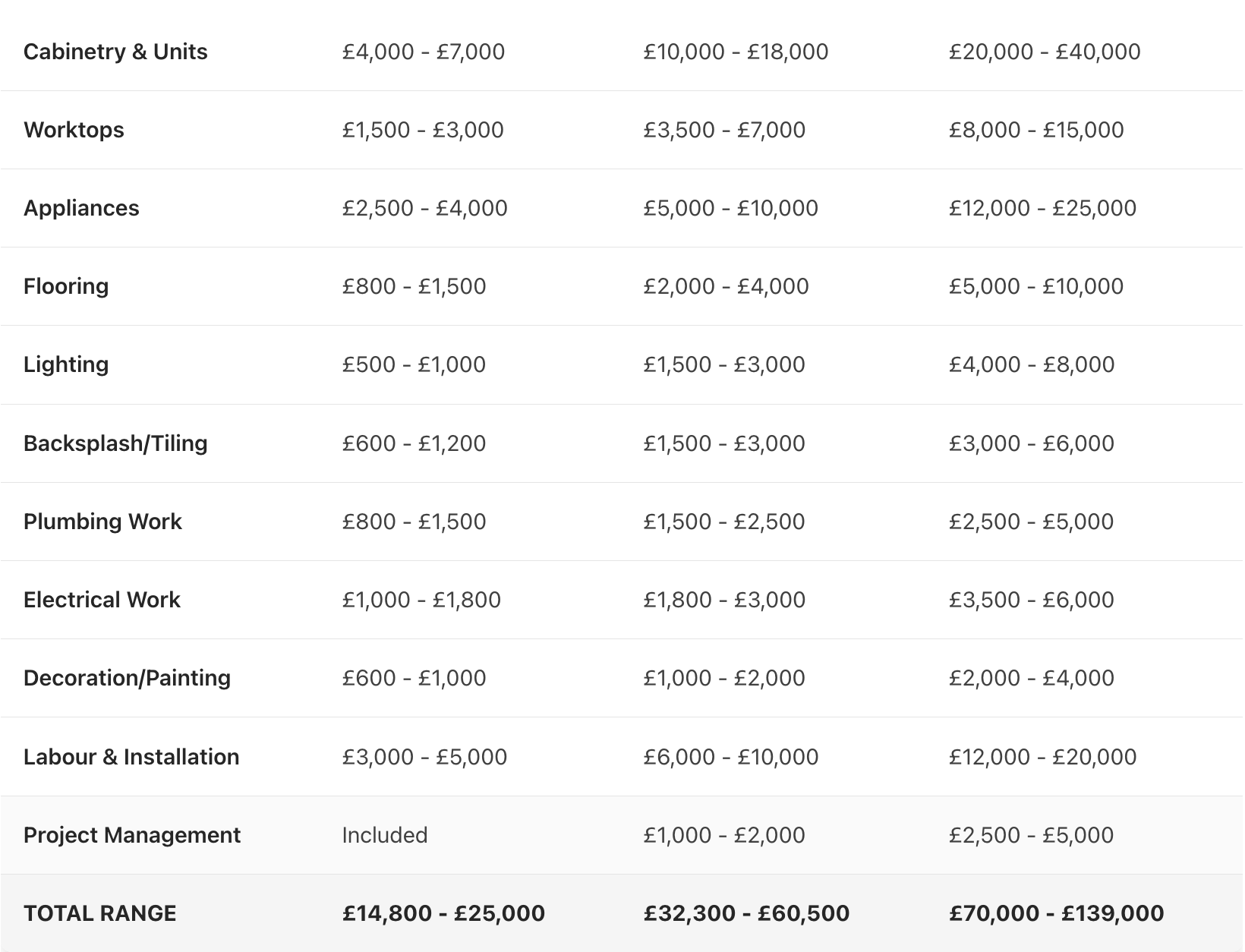
Quick Heads Up: Labour and installation usually eat up about 25-35% of your total budget. So yeah, choosing good builders matters. A lot. The thing is, experienced contractors actually finish faster, which saves you money. That's why our 7-10 day thing works – fewer days means less disruption, and you don't end up spending £1k-£2k on hotels or takeaways because your kitchen's a building site for weeks.
Where You Live Actually Matters (Sorry)
Look, I wish this wasn't true, but where your place is in London makes a massive difference to what you'll pay. Different boroughs have different rules, different labour rates, and honestly, different levels of pain when it comes to parking and deliveries. We've done enough kitchens across London to know this, so here's what we've learned about the main boroughs.

Kensington & Chelsea
+25-35% Premium
The most expensive borough for kitchen renovations, driven by stringent conservation area requirements, listed building restrictions, and high-end client expectations. Parking permits cost £400-£600 per month, and many properties require specialist heritage consultants.
Westminster
+20-30% Premium
Similar to Kensington, Westminster's central location and abundance of period properties drive costs up. Many projects require Party Wall agreements (£700-£1,500) and Building Control approval (£400-£1,200).
Camden
+15-20% Premium
Victorian and Edwardian terraces dominate, often requiring structural work for modern open-plan layouts. Conservation areas are common but less restrictive than Royal Boroughs.
Wandsworth
Standard Rates
Represents the London average for kitchen renovation costs. Popular with families, projects typically focus on practical, high-quality finishes rather than luxury specifications.
Islington
+10-15% Premium
Georgian and Victorian properties are prevalent, many with listed status or in conservation areas. The borough is known for design-conscious residents who invest in quality materials.
Greenwich
-5-10% Discount
Slightly below central London averages, Greenwich offers better value while maintaining quality. The World Heritage Site area has restrictions, but most residential areas have standard planning requirements.
The Stuff Nobody Tells You About (Until It's Too Late)
Okay, here's the truth – most people forget about all the random costs that pop up during a kitchen renovation. I'm not trying to scare you, but after doing many of kitchens in London, we've seen what catches people out. If you plan for this stuff from the start, you won't get that nasty surprise halfway through when you've already ripped everything out.
Structural and Compliance Costs
- Structural Surveys (£300-£800): Before beginning any major work, particularly in older properties, a structural survey identifies potential issues like subsidence, wall integrity, or foundation problems.
- Asbestos Testing (£150-£400): Mandatory for pre-1980s properties before demolition work begins. Asbestos removal, if found, costs £1,500-£5,000 depending on extent and type.
- Building Control Fees (£400-£1,200): Required when making structural changes, relocating plumbing, or undertaking significant electrical work.
- Party Wall Agreements (£700-£1,500): Essential when working on shared walls in terraced or semi-detached properties. Both you and your neighbor require surveyors, and the process takes 2-3 months.
Unexpected Structural Issues
Once demolition begins, hidden problems frequently emerge. Rotten joists, inadequate damp-proofing, outdated electrical wiring, or corroded plumbing are common in London properties over 50 years old. Budget 15-20% contingency for these discoveries.
Will You Actually Get Your Money Back?
This is the question everyone asks – is this actually worth it? Here's the good news: kitchen renovations are one of the best investments you can make in your London property. Studies show that a good kitchen renovation usually gets you back 70-100% of what you spent when you sell. Sometimes even more if you're in the right area. So yeah, it's worth it.
Property Value Increases by Renovation Tier
Data from London estate agents and recent property transactions reveals clear patterns in value uplift based on renovation quality and property type. A budget renovation (£12,000-£20,000) typically increases property value by 2-4%, ideal for entry-level homes or rental properties where over-investment risks never being recouped. Premium renovations (£25,000-£45,000) deliver 5-8% value increases, the sweet spot for family homes in middle-market London boroughs like Wandsworth, Richmond, or Ealing.
Luxury renovations (£50,000-£80,000+) in high-value areas can deliver 8-12% increases, particularly in Kensington, Chelsea, Notting Hill, or Hampstead where buyers expect exceptional quality. However, the absolute returns matter more than percentages. A £60,000 kitchen renovation in a £2 million Kensington property returning 10% adds £200,000 in value—a £140,000 net gain.

Features That Maximise ROI
High-Return Features:
- Quality Worktops (Quartz/Granite): 95-110% return. Buyers prioritize durable, attractive work surfaces.
- Integrated Appliances: 90-105% return. Creates clean lines and modern aesthetics that appeal strongly to buyers.
- Effective Storage Solutions: 85-100% return. Soft-close drawers, pull-out larders address London's space constraints.
- Good Lighting: 80-95% return. Under-cabinet LEDs, pendant features transform functionality and ambiance.
Speed to Sale Impact
Beyond direct value increases, modern, well-designed kitchens significantly accelerate property sales. Estate agents report that properties with recently renovated kitchens sell 22-35 days faster than comparable properties with dated kitchens. In a competitive market, this speed advantage can prevent price reductions and carrying costs that quickly erode your net proceeds.

How Long Is This Actually Going to Take?
This is what everyone wants to know – when will I get my kitchen back? The honest answer? Most kitchens take 4-8 weeks if you go with a standard builder. But here's where we're different – we've figured out how to do most kitchens in 7-10 days. I know it sounds too good to be true, but we've done it many times. Same quality, way less disruption.
How We Actually Do It in 7-10 Days
People always ask how we pull this off. The secret? Lots of planning upfront, and a team that knows what they're doing. Here's the day-by-day breakdown:
Days 1-2: We Rip Everything Out
First thing we do is protect your house – dust sheets everywhere, barriers up. Then we tear out all the old stuff – units, worktops, appliances. Everything goes. While we're doing that, the electricians and plumbers start doing their first fix – new circuits, moving pipes around, all that stuff. By end of day two, your kitchen is basically a blank slate. Ready for the fun part.
Days 3-5: The Big Installation
This is when it gets exciting. New cabinets go in – everything's got to be perfectly level, perfectly aligned. Worktops get templated on day three, then installed on day four (gotta let the glue set). Meanwhile, plumbers are connecting sinks and appliances, electricians are putting in sockets and lights. It's chaos, but it's organized chaos. Everyone knows what they're doing.
Days 6-7: Making It Pretty
Tiles go up on the backsplash. Flooring goes down – whatever you chose, engineered wood, tiles, vinyl. Cabinet doors get adjusted so everything lines up perfectly. Handles and knobs get fitted. We touch up any paint marks, fix any little scuffs. It's starting to look like an actual kitchen now.
Days 8-10: Final Checks & Handover
Everything gets tested – all appliances plugged in and working. Gas Safe engineer certifies the gas stuff. Electrician gives you your certificates. We do a final walkthrough, make sure everything's perfect. Then we sit down with you, show you how everything works, answer your questions. Finally, we clean everything – and I mean everything. Deep clean. You're ready to cook.

What If It's More Complicated?
Right, so the 7-10 day thing works for most standard kitchens. But what if you're doing something bigger? Knocking down walls? Getting a fully bespoke kitchen? Then we're talking different timelines:
Week 1: The Demolition Phase
We strip everything out, do any structural work (steel beams, that sort of thing), and rough-in all the plumbing and electrics.
Weeks 2-3: The Build Phase
Cabinets go in, worktops get fitted, tiling happens, flooring goes down. If you're doing fully bespoke, this can stretch to 4-5 weeks because every cabinet is made to measure.
Week 4: The Finish
Appliances go in, everything gets certified, final touches, quality checks. Done.
How Do You Actually Live During This?
Good question. Even with our fast-track thing, you're going to need a temporary setup. Put a microwave and kettle in another room. Get one of those portable induction hobs. Stock up on paper plates and plastic cutlery – trust me, you'll thank me later. If your fridge is disconnected, get a cooler box for the essentials. Plan on eating out or getting takeaways during the worst of it. Look, I'm not going to lie – there's going to be some disruption. But our whole thing is minimizing it. 7-10 days versus 4-8 weeks? That's a massive difference.
Do You Need Permission? Probably Not, But...
Look, this is the boring but important bit. Most kitchen renovations don't need planning permission – thank god. But Building Regulations? Yeah, you'll almost definitely need that. Let me break this down so you know what you're dealing with, because getting this wrong can cost you time and money.
When You Need Planning Permission
Standard kitchen renovations within existing spaces typically don't require planning permission. However, you'll need permission for:
- Kitchen Extensions: Any structural addition to your property, whether single-storey rear extensions or side-return extensions, requires planning permission unless covered by Permitted Development Rights.
- Listed Buildings: Any alterations to Grade I or Grade II listed properties require Listed Building Consent, even for internal changes like new kitchen layouts.
- Conservation Areas: While internal work usually doesn't need permission, external changes like new windows, doors, or rooflight installations typically do.
- Structural Changes Affecting External Walls: Removing or altering load-bearing walls that form part of your property's exterior envelope may require permission.
Planning applications cost £206 for householder applications and take 8-12 weeks for decisions. For complex projects or conservation areas, hiring a planning consultant (£1,500-£3,000) significantly improves approval chances.
Building Regulations: Always Required
Even when planning permission isn't needed, Building Regulations approval is mandatory for most kitchen work. This ensures your renovation meets current safety, structural, and energy efficiency standards. You'll need approval for:
- Electrical Work: All new circuits, rewiring, or electrical installations must comply with Part P and be certified by a qualified electrician.
- Gas Work: All gas appliance installations and pipe modifications require Gas Safe registered engineers and compliance certificates.
- Structural Alterations: Removing walls, installing steel beams, or changing load-bearing structures requires Building Control approval and structural engineer calculations.
- Ventilation: Kitchen extraction systems must meet Part F requirements, typically requiring mechanical ventilation to outside air.
- Plumbing Changes: Relocating sinks, installing new plumbing, or modifying drainage requires Building Control notification.
Building Control fees range from £400-£1,200 depending on the scope of work. Failure to obtain proper approvals can result in enforcement action, fines, and complications when selling your property. Always work with contractors who understand London's building regulations and can guide you through the approval process.
2026 Design Trends for London Kitchens
London kitchen design in 2026 reflects a sophisticated blend of timeless elegance and contemporary innovation. Homeowners are seeking spaces that combine aesthetic appeal with practical functionality, resulting in several dominant trends shaping kitchen renovations across the capital.
Sustainability & Eco-Conscious Materials
Environmental considerations are driving material choices more than ever. Recycled glass worktops, sustainably sourced timber, and low-VOC paints are becoming standard requests. Energy-efficient appliances with A+++ ratings are now expected rather than optional, with homeowners recognizing long-term cost savings alongside environmental benefits.
Seamless Integration of Technology
Smart kitchens are evolving beyond basic smart appliances. Integrated charging stations in islands, under-cabinet LED lighting with app control, and voice-activated faucets are increasingly popular. However, technology is being integrated subtly—homeowners want functionality without compromising the kitchen's aesthetic warmth.
Warm Neutrals & Natural Tones
While white kitchens remain popular, 2026 sees a shift toward warm neutrals—beige, cream, and soft grey tones creating inviting spaces. Natural wood finishes, both for cabinets and flooring, add warmth and texture. Matte finishes are preferred over high-gloss, creating a more sophisticated, understated elegance.
Maximized Storage Solutions
London's space constraints make intelligent storage essential. Corner carousels, pull-out pantries, and drawer systems with dividers are standard in premium renovations. Integrated appliance garages for coffee makers and toasters keep countertops clutter-free, while vertical storage maximizes every available inch.
Statement Islands & Multi-Functional Spaces
Kitchen islands continue as focal points, but functionality is enhanced with integrated seating, wine storage, and power outlets for remote working. The kitchen-diner concept is evolving into true multi-functional spaces that serve cooking, dining, working, and socializing purposes seamlessly.
How to Choose a Kitchen Renovation Company in London
Selecting the right renovation company is the most critical decision affecting your project's success, timeline, and final outcome. London's construction market includes everything from fly-by-night operators to established firms, making due diligence essential.
Essential Credentials to Verify
- Insurance Coverage: Ensure your contractor has both public liability insurance (minimum £5 million) and employers' liability insurance. Request certificates and verify they're current.
- Trade Association Membership: Look for memberships in recognized bodies like FMB (Federation of Master Builders), TrustMark, or Checkatrade. These require rigorous vetting and ongoing monitoring.
- Gas Safe Registration: For gas work, verify Gas Safe registration. Electricians should be NICEIC registered or equivalent. Ask to see registration numbers and verify online.
- Professional Qualifications: Check qualifications for project managers, site supervisors, and key trades. NVQ qualifications, CSCS cards, and industry certifications demonstrate competence.
Red Flags to Avoid
- Cash-Only Pricing: Legitimate businesses accept various payment methods. Cash-only requests often indicate tax avoidance or lack of proper business registration.
- Unrealistic Quotes: Quotes significantly below market rates often indicate poor materials, inexperienced labor, or hidden costs that emerge later.
- Pressure to Decide Quickly: Professional companies understand you need time to consider quotes. High-pressure sales tactics suggest desperation or questionable practices.
- Unwillingness to Provide References: Established companies should readily provide references from recent projects. Reluctance to share contact details raises concerns.
- Lack of Written Contracts: Always insist on detailed written contracts specifying work scope, timeline, payment schedule, and materials. Verbal agreements offer no protection.
Questions to Ask During Consultations
- Can you provide references from three similar projects completed in the last 12 months?
- How many kitchen renovations do you complete annually in London?
- What's your typical project timeline, and how do you handle delays?
- Who will manage my project day-to-day, and can I meet them?
- How do you handle unexpected issues discovered during demolition?
- What warranty do you provide on workmanship and materials?
- Can I visit a project currently under construction?
ATC Premium Builders Credentials: We're fully insured, FMB registered, and hold all required certifications. We provide detailed written quotes, fixed-price contracts, and comprehensive warranties. Over 60% of our business comes from repeat clients and referrals—testament to our commitment to quality and customer satisfaction.

Money-Saving Tips for Kitchen Renovations
Smart planning and strategic choices can significantly reduce your kitchen renovation costs without compromising quality. Here are proven strategies from our experience completing many London projects.
Timing Your Renovation
- Off-Peak Season Booking: Demand peaks in spring and early autumn. Booking projects for late autumn or winter can secure 10-15% discounts as contractors have fewer competing projects.
- End-of-Line Appliances: Retailers discount discontinued models when new ranges launch. You can save 20-40% on high-quality appliances if you're flexible on exact models.
- Warehouse Sales: Kitchen showrooms often hold clearance events for display kitchens or end-of-line stock, offering 30-50% savings.
Strategic Material Choices
- Laminate vs Solid Wood Doors: High-quality laminate doors can achieve similar aesthetics to solid wood at 40-60% less cost. Modern laminates are durable and suitable for most applications.
- Quartz vs Marble Worktops: Quartz offers marble's aesthetic appeal with superior durability and lower maintenance at 30-40% less cost. Premium quartz brands like Caesarstone and Silestone provide excellent value.
- Vinyl Flooring vs Tiles: Luxury vinyl tiles (LVT) offer tile aesthetics with easier installation and lower costs. Modern LVT is waterproof, durable, and perfect for kitchens.
- Standard Cabinet Sizes: Bespoke cabinetry costs 2-3x more than standard sizes. Maximize standard sizes and only use bespoke where absolutely necessary.
Work That Doesn't Require Full Replacement
- Reface Existing Cabinets: If your cabinet boxes are sound, refacing doors and drawer fronts costs 60-70% less than full replacement while transforming appearance.
- Restore Rather Than Replace: Victorian or Edwardian original features like floorboards or fireplaces can be restored professionally at a fraction of replacement costs while preserving character.
- Paint Over Tile: Specialized tile paints can transform dated tiles for £50-£200 versus £2,000-£4,000 for full replacement. This works particularly well for backsplashes.
Where NOT to Cut Corners
Some cost-cutting measures create false economies that cost more long-term:
- Electrical & Gas Work: Always use qualified, registered professionals. DIY or unqualified work invalidates insurance and can create serious safety hazards.
- Structural Changes: Load-bearing wall removal requires structural engineers and proper Building Control approval. Attempting shortcuts risks catastrophic failure.
- Waterproofing & Ventilation: Skimping on proper damp-proofing or ventilation leads to expensive repairs and potential health issues from mold growth.
- Quality Installation: Even premium materials look poor if poorly installed. Invest in experienced, reputable contractors for installation work.
FAQ Section - Questions Everyone Asks
How much does a kitchen renovation actually cost in London in 2026?
So the honest answer? It depends. But here's the ballpark: budget kitchens start at around £12k-£20k, the sweet spot (what most people go for) is £25k-£45k, and if you want to go all out with a luxury bespoke job, you're looking at £50k-£80k+. Size, materials, appliances, and where you live all make a difference.
How long does it actually take?
We do most kitchens in 7-10 days. That's our thing. But generally speaking, budget jobs take 2-3 weeks, premium ones take 3-5 weeks, and if you're going fully bespoke luxury, you're looking at 6-10 weeks. It really depends on how complicated it is.
Do I need planning permission?
Probably not. Most kitchen renovations don't need it – just swapping out units and worktops is fine. But if you're extending, knocking down walls, or you've got a listed building or you're in a conservation area, then yeah, you'll need permission. Building Regulations approval is different – you'll almost definitely need that for electrical, gas, and structural work.
Will I actually get my money back?
Most likely, yes. Kitchen renovations usually return 70-100% of what you spend when you sell. If you're in a nice area like Kensington, you might even get more back. It's one of the best investments you can make in your property.
What are the hidden costs that catch people out?
The stuff that surprises people? Structural issues you find when you rip everything out (£2k-£5k), asbestos testing and removal if you've got an old place (£150-£5k), Building Control fees (£400-£1,200), Party Wall agreements if you're in a terrace (£700-£1,500), rewiring if your electrics are ancient (£2k-£5k), and accommodation costs if you can't live there (£1k-£3k). My advice? Budget an extra 15-20% for the unexpected.
Do I really need Building Regulations approval?
Yeah, you do. Even if you don't need planning permission, you'll need Building Regs approval for pretty much any electrical, gas, or structural work. It's not optional – it's the law. Make sure you're working with contractors who know this stuff, because getting it wrong can cause you serious problems later.
How do I pick the right builder?
Good question. Check they've got proper insurance (at least £5 million public liability), see if they're members of things like FMB or TrustMark, ask for references from similar jobs, make sure you get everything in writing – proper contracts with timelines and prices. If someone's asking for cash only or their quote is suspiciously cheap? Run. Seriously. Choose someone with a track record who'll give you a proper quote and stick to it.
What are the biggest mistakes people make?
The classic mistakes? Not budgeting for hidden costs (seriously, add that 15-20% contingency), not getting Building Regs sorted, going with the cheapest quote without checking if they're actually any good, trying to do structural stuff without getting advice first, and not planning how you'll manage without a kitchen. Work with decent contractors who'll be honest with you and do things properly.