
Bathroom Renovation London | Victorian to Modern Luxury | ATC
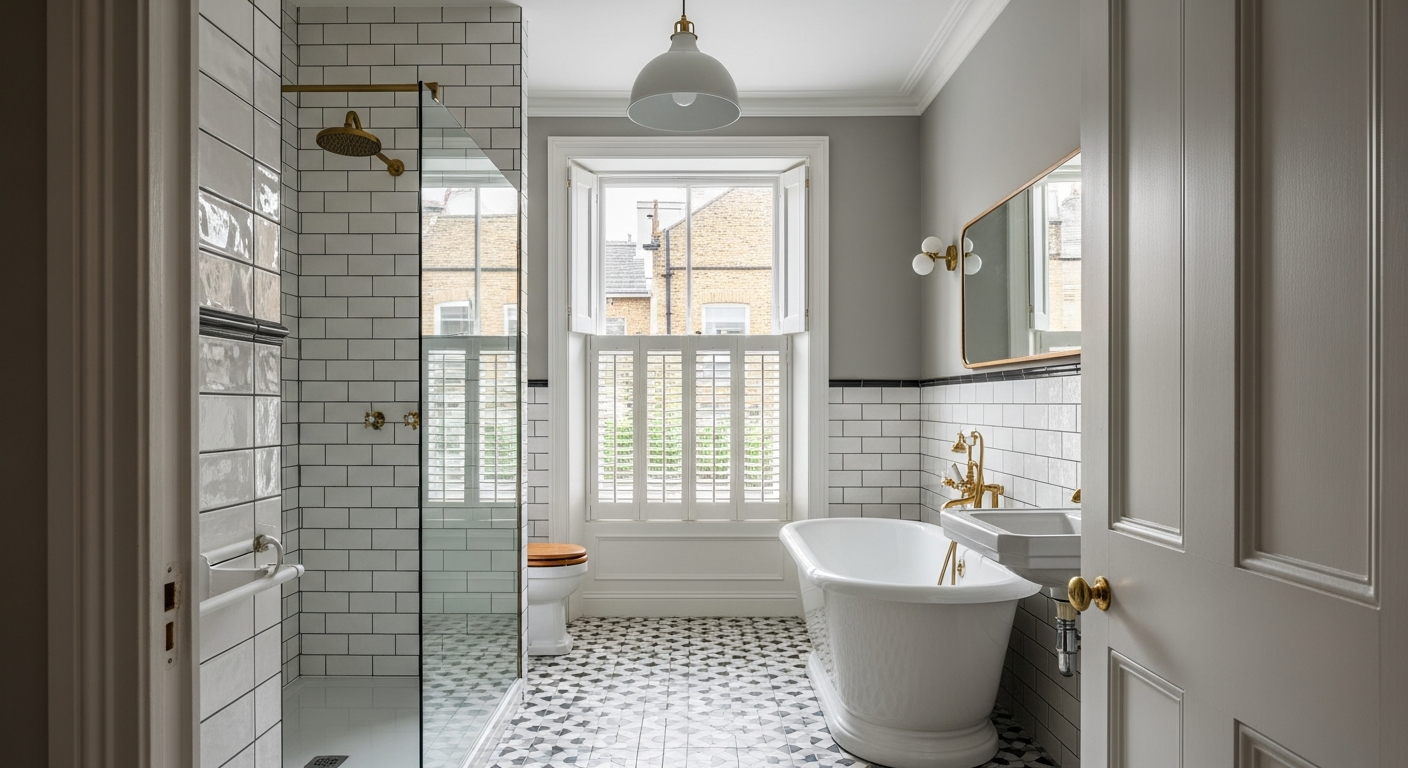
Your Victorian terrace has survived over a century of London life. The original fireplaces tell stories, the high ceilings create grandeur, and the proportions speak to an era when craftsmanship truly mattered. Yet there you stand each morning, in a bathroom that somehow escaped time—but not in a charming way. The avocado suite from the 1970s, the temperamental plumbing that groans before delivering lukewarm water, the cramped layout that forces you to choose between a proper shower or any floor space whatsoever.
If this sounds familiar, you're certainly not alone. Across Kensington, Chelsea, Notting Hill, and Hampstead, thousands of period property owners face the same dilemma: how do you transform a bathroom into the modern sanctuary you deserve whilst respecting the architectural heritage that makes your home special?
This is the question we answer every week at All Things Considered, and after over a decade of luxury bathroom renovations across prime London postcodes, we've discovered that the most successful transformations don't fight against period character—they enhance it.
Understanding the Victorian Bathroom Challenge
Victorian terraced houses were revolutionary for their time, but their bathrooms tell a different story. Most were afterthoughts, squeezed into spaces never designed for modern bathing. The original Victorian bathroom—if your property had one at all—was likely a converted bedroom or an extension tacked onto the back of the house.
This heritage creates specific challenges that generic bathroom renovation advice simply doesn't address.
The Plumbing Predicament
Victorian lead pipes have carried water through London homes for generations, but they were never designed for modern pressure systems or contemporary water heaters. When we begin a bathroom renovation in properties across Chelsea and Kensington, our first task is always a comprehensive plumbing assessment. We regularly encounter lead supply pipes that need replacing, soil stacks positioned in awkward locations, and water pressure that fluctuates dramatically between floors.
One recent project in a Notting Hill Victorian terrace revealed copper patches on lead pipes dating back to at least three different decades—each previous owner had addressed symptoms rather than solving the underlying infrastructure issues. The homeowner had lived with poor shower pressure for years, assuming it was simply "how Victorian houses are." Within our renovation, we completely renewed the water supply, installed a properly specified unvented cylinder, and delivered consistent, powerful pressure throughout the property.
The Footprint Problem
Step into the bathroom of most Victorian terraces and you'll find yourself in a space roughly the size of a generous wardrobe. Original Victorian bathrooms typically measure between 4 and 6 square metres—a fraction of what modern families expect. This constraint becomes even more challenging when you factor in the positioning of soil stacks, external walls, and load-bearing structures that cannot be moved.
Yet small doesn't need to mean compromising. We recently completed a bathroom renovation in a Chelsea Victorian terrace where the entire room measured just 4.2 square metres. Through thoughtful design—wall-hung sanitaryware, a bespoke glass shower enclosure, recessed storage, and carefully considered tile choices—we created a space that feels genuinely luxurious. The homeowner described it as "like stepping into a boutique hotel, except it's somehow in my Victorian terrace."
Conservation Area Considerations
If your period property sits within one of London's many conservation areas—as much of Kensington, Chelsea, Hampstead, and Richmond does—your bathroom renovation carries additional considerations. Whilst internal works generally don't require planning permission, any external changes, including soil pipe routes, extractor vents, and window alterations, may need consent from your local conservation officer.
This is where experience matters enormously. We've navigated conservation requirements across every prime London borough, understanding exactly what each council requires and how to achieve your design goals within their guidelines. A heritage-sensitive approach isn't a limitation—it's an opportunity to create something that truly belongs in your period home.
The Modern Victorian Bathroom: Principles of Successful Design
The most successful Victorian bathroom renovations we've completed share common principles. They don't attempt to disguise the period property or create something that looks transplanted from a contemporary new-build. Instead, they celebrate the marriage of heritage character and modern luxury.
Preserving Period Proportions
Victorian properties have a particular rhythm—high ceilings, generous skirting boards, elegant cornice details. Your bathroom should speak the same architectural language. This might mean continuing dado rail heights from hallways into bathroom tiling, selecting sanitaryware with classical proportions, or incorporating decorative ceiling details that echo those in your main living spaces.
In a recent Kensington project, the homeowner initially wanted a completely minimal, contemporary bathroom. After discussing how this might feel disconnected from their property's Georgian character, we developed a design that used contemporary materials—large-format porcelain, frameless glass, wall-hung sanitaryware—but organised them according to the room's period proportions. Subtle details like a decorative border tile at picture-rail height created visual harmony with the rest of the house.
Embracing Original Features
Original features aren't obstacles to work around—they're assets to celebrate. If your Victorian bathroom has original floorboards, an original sash window, or decorative corbels, consider how your renovation can showcase rather than conceal them.
We've successfully incorporated original Victorian cast-iron radiators (refurbished and fitted with thermostatic valves), exposed original brickwork as feature walls, and even salvaged original encaustic floor tiles for reuse in renovated spaces. Each of these decisions roots the new bathroom firmly in the property's heritage whilst delivering thoroughly modern comfort.
Material Selection for Period Properties
The materials you choose speak volumes in a period property. Cold, clinical surfaces can feel jarringly modern, whilst overly traditional choices risk creating something that feels dated rather than timeless.
The most successful material palettes we've developed combine natural materials—marble, stone, wood, brass—with contemporary manufacturing techniques that deliver durability Victorian craftsmen could only have dreamed of. Large-format porcelain tiles that perfectly replicate Carrara marble, for instance, deliver the aesthetic of classical Italian stone with practical benefits: warmth underfoot when combined with underfloor heating, resistance to staining, and straightforward maintenance.
The Transformation Process: What to Expect
Understanding what a bathroom renovation actually involves helps homeowners prepare properly and sets realistic expectations. Our 4-step ATC System ensures every project progresses smoothly from initial vision to final unveiling.
Consultation and Assessment
Every bathroom renovation begins with understanding both your aspirations and your property's realities. During our initial consultation, we examine not just the bathroom itself but how it connects to your home's infrastructure. We assess plumbing runs, electrical capacity, structural considerations, and ventilation options before any design work begins.
This thorough assessment prevents the unpleasant surprises that plague poorly-planned renovations. We know before committing to a design whether your joists can support that freestanding stone bath, whether your electrical supply can accommodate underfloor heating, and whether your chosen shower will deliver satisfying pressure.
Design Development
With practical constraints understood, design can proceed creatively within realistic boundaries. We develop detailed proposals including spatial layouts, material specifications, fixture selections, and visualisations that show exactly how your transformed bathroom will look and feel.
This stage involves genuine collaboration. We bring expertise in what works—technically and aesthetically—in period properties, whilst you bring knowledge of how you actually live. The goal is a bathroom that functions perfectly for your daily routines whilst delivering the visual impact you're seeking.
The Build Phase
The actual construction work is where expertise matters most. Bathroom renovations involve multiple specialist trades—plumbers, electricians, tilers, carpenters, decorators—and coordinating these effectively determines whether your project runs smoothly or descends into chaos.
Our team handles this coordination completely, managing every tradesperson and ensuring work progresses in the correct sequence. You're kept informed throughout but never overwhelmed with decisions that should be handled by professionals. For most bathroom renovations, the build phase takes between three and six weeks depending on scope and complexity.
Unveiling Your Transformation
The final stage is perhaps the most satisfying—seeing your completed bathroom for the first time. We conduct thorough snagging inspections before handover, ensuring every detail meets our standards. You receive full documentation of all work completed, warranties for fixtures and fittings, and guidance on maintaining your new space.
Real Transformations: London Period Properties
Nothing illustrates what's possible better than real examples from properties similar to yours.
Victorian Terrace, Notting Hill
This three-storey Victorian terrace had its original bathroom awkwardly positioned at the half-landing—a common arrangement in these properties. The 5-square-metre space featured dated sanitaryware, worn vinyl flooring, and a shower that delivered more disappointment than water.
The transformation reconfigured the space to accommodate a generous walk-in shower with rainfall and handheld options, wall-hung WC and basin, and concealed storage. Materials included large-format marble-effect porcelain, brushed brass fixtures, and bespoke glass enclosures. Underfloor heating replaced the old wall-mounted radiator, freeing wall space and eliminating cold floor tiles.
The result: a spa-like sanctuary that functions beautifully for a busy professional couple whilst respecting the property's Victorian character.
Georgian Townhouse, Chelsea
This Grade II listed property required particular sensitivity. The second-floor bathroom had been poorly updated in the 1980s, with no concessions to the building's heritage status.
Working within conservation guidelines, we created a bathroom that feels authentically Georgian whilst delivering contemporary performance. A freestanding roll-top bath (with modern internals) became the centrepiece, positioned beneath the original sash window. Wall panelling in the Georgian style conceals modern plumbing and provides storage. Hexagonal marble floor tiles reference Victorian patterns whilst delivering a fresh, contemporary palette.
Edwardian Semi, Hampstead
A young family needed their cramped bathroom to work harder. The original layout wasted space and provided no storage, leaving toiletries scattered across every surface.
By reconfiguring the layout and incorporating wall-hung sanitaryware, we created space for a generous bath—essential for bath-time with young children—alongside a proper shower enclosure. Floor-to-ceiling storage concealed within wall panelling provides ample space for everything from towels to nappies. The design references Edwardian bathroom traditions through subway tile arrangements and period-appropriate fixtures whilst functioning for thoroughly modern family life.
Investment and Value
Bathroom renovations in period London properties typically range from 15,000 GBP for smaller, straightforward projects to 50,000 GBP or more for larger spaces with premium specifications. Several factors influence where your project sits within this range: the scope of plumbing and electrical work required, your material and fixture selections, and any structural modifications needed.
What's consistent is the value created. A well-executed bathroom renovation typically returns 70-80% of its cost in added property value—and that calculation doesn't account for the daily pleasure of using a beautifully designed space. For period properties in prime London locations, exceptional bathrooms can become genuine selling points, distinguishing your property in a competitive market.
Choosing Your Renovation Partner
The success of any bathroom renovation depends enormously on who completes it. Period properties demand particular expertise—understanding how Victorian structures behave, recognising the signs of underlying issues before they become problems, and knowing how to achieve contemporary results within heritage constraints.
Look for demonstrable experience with properties like yours. Ask to see examples of work in similar period homes. Check that your renovation partner understands the specific challenges of Victorian plumbing, small footprints, and conservation requirements.
At All Things Considered, we've spent over a decade refining our approach to period property renovations. As a family-run business, we treat your home with the care we'd give our own. We understand that your Victorian terrace, Georgian townhouse, or Edwardian semi isn't just a property—it's where your life happens.
Taking the First Step
If you're ready to transform your period bathroom from Victorian compromise to modern luxury, we'd welcome the opportunity to discuss your project. Our initial consultation is complimentary and without obligation—an opportunity for us to understand your vision and for you to understand how we work.
Contact Wale and the team to arrange a convenient time to meet at your property. We'll assess your space, discuss possibilities, and provide honest guidance on what can be achieved within your budget and timeline. Your bathroom deserves to be something you genuinely enjoy—not merely tolerate—and we'd be honoured to help create that transformation.
Frequently Asked Questions
How long does a bathroom renovation take in a Victorian property?
Most bathroom renovations in Victorian terraces take between three and six weeks for the actual construction work. However, allow additional time beforehand for design development and material procurement—typically four to eight weeks depending on your fixture and tile selections. Period properties sometimes reveal unexpected issues once work begins, so we always build contingency into our timelines to ensure these don't delay your completion date.
Do I need planning permission for a bathroom renovation in a conservation area?
Internal bathroom renovations generally don't require planning permission, even in conservation areas. However, any external changes—such as new extraction vents, relocated soil pipes, or window alterations—may require consent. We assess these requirements during initial consultation and handle any necessary applications as part of our service, ensuring your renovation proceeds without planning complications.
Can you maintain period features during a bathroom renovation?
Absolutely—and we actively encourage it. Original features like sash windows, decorative cornicing, cast-iron radiators, and period floorboards can be incorporated into contemporary bathroom designs. In fact, these heritage elements often become focal points that make your bathroom feel authentically connected to your Victorian or Georgian property rather than like an incongruous modern insertion.
What's the best way to deal with poor water pressure in a Victorian house?
Poor water pressure is one of the most common complaints in period properties, usually caused by outdated pipework, undersized supplies, or inadequate hot water systems. The solution depends on diagnosis—sometimes pipe replacement alone resolves the issue, whilst other properties benefit from unvented hot water cylinders or pump-assisted systems. We assess water pressure as part of every bathroom consultation and recommend the most effective solution for your specific situation.
How much should I budget for a luxury bathroom renovation in London?
Luxury bathroom renovations in London period properties typically range from 25,000 GBP to 50,000 GBP, depending on size, specification, and the extent of plumbing and electrical work required. Properties needing significant infrastructure upgrades or structural modifications may sit at the higher end, whilst straightforward renovations with good existing services can sometimes be achieved more economically. We provide detailed, itemised quotations after initial assessment so you understand exactly what's included.