
Planning Permission for House Extensions in Kensington: Complete 2026 Guide
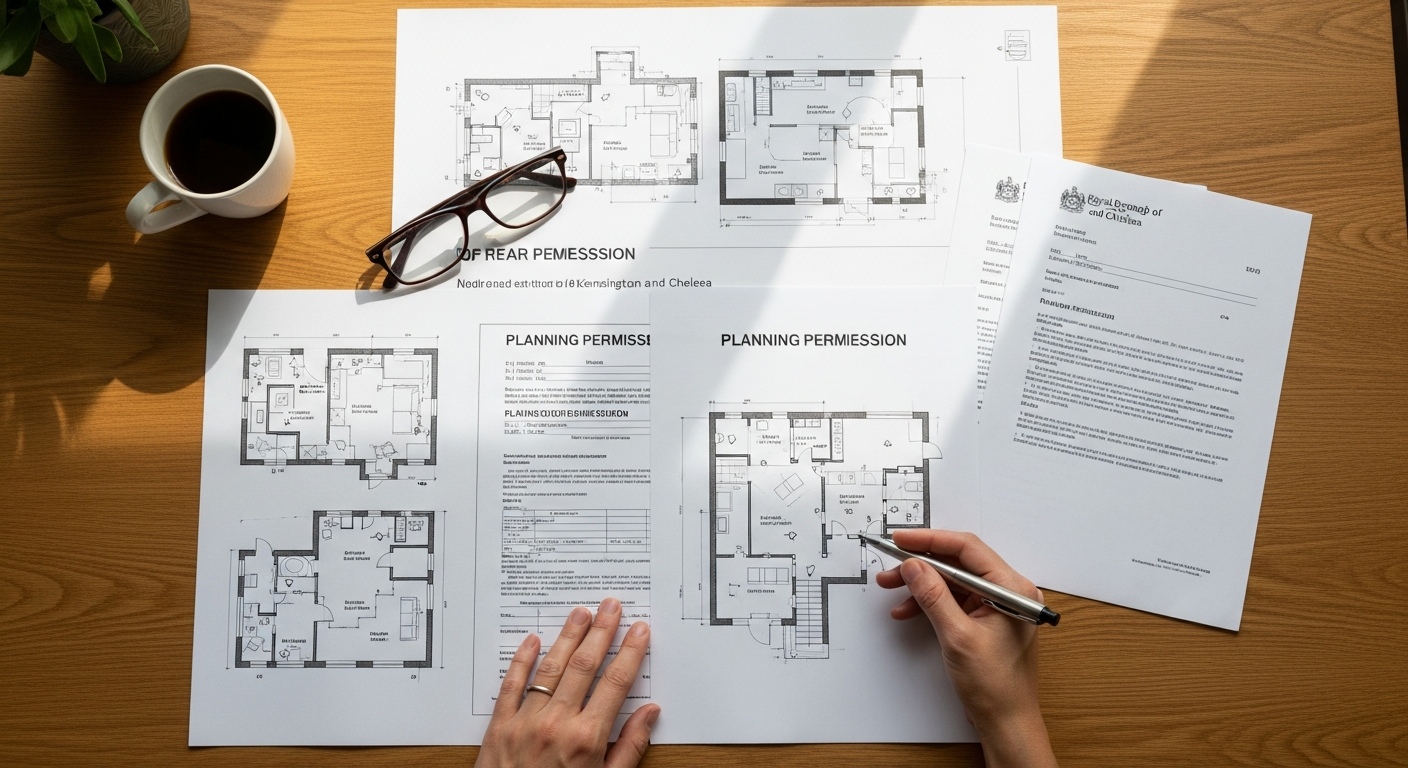
You've found the perfect period property in Kensington—perhaps a handsome Victorian terrace on a tree-lined street in South Kensington, or an elegant stucco-fronted home near Holland Park. Now you're ready to extend, creating the open-plan kitchen-diner your family needs or adding that extra bedroom for a growing household. But between you and your vision stands a three-letter acronym that strikes uncertainty into the hearts of Kensington homeowners: RBKC.
The Royal Borough of Kensington and Chelsea operates one of the most stringent planning regimes in the country, and for good reason. This borough contains more listed buildings and conservation areas per square mile than almost anywhere else in Britain. Understanding how to navigate planning permission for house extensions in Kensington isn't just helpful—it's essential for protecting both your investment and your timeline.
This guide walks you through everything you need to know: when you can extend under permitted development rights, when you'll need full planning permission, how to work with conservation officers, and crucially, what realistic timelines look like. We've helped homeowners across Kensington, Chelsea, and Notting Hill navigate this process for over a decade, and we've learned that the key to success lies in understanding the rules before you commit to a design.
Understanding Permitted Development Rights in Kensington
Permitted development rights allow certain types of home improvements without requiring a formal planning application. Across much of England, these rights enable homeowners to build single-storey rear extensions up to certain sizes, add loft conversions, or construct outbuildings—all without submitting plans to the council.
However, if your Kensington property falls within a conservation area (and the overwhelming majority do), your permitted development rights are significantly restricted. The borough contains over 30 conservation areas, covering neighbourhoods from Kensington Palace to Earl's Court, from Ladbroke to Brompton.
Within these areas, permitted development rights are curtailed in several important ways. Side extensions generally require planning permission regardless of size. Cladding the exterior of your home in stone, artificial stone, timber, or other materials needs approval. Rear extensions face stricter limitations, and any addition that would be visible from a public highway typically requires a full application.
Before assuming your project needs planning permission, it's worth establishing exactly what restrictions apply to your property. You can check whether your home sits within a conservation area using RBKC's online planning portal, and it's often worth obtaining a Certificate of Lawful Development (CLUD) to confirm your permitted development rights before commencing work. This certificate costs approximately £120 and provides legal confirmation that your proposed extension is lawful—valuable protection should you sell the property in future.
When Full Planning Permission Is Required
For most meaningful house extensions in Kensington, you'll need to submit a full planning application, known as a householder application. This is typically required when your project exceeds permitted development limits, your property is within a conservation area and the extension affects the external appearance, you're altering the front elevation of your home, or you're proposing a basement excavation.
RBKC scrutinises applications with particular attention to how proposals affect the character and appearance of conservation areas. Their planners examine scale, massing, materials, and design details—everything from window proportions to brick courses may be considered. This rigorous approach protects the borough's architectural heritage but requires applicants to present thoughtfully designed proposals that respect their context.
For rear extensions in conservation areas, planners typically expect designs to be subordinate to the original building, use materials that complement the existing property, and avoid harming the amenity of neighbouring properties through overlooking, overshadowing, or creating an overbearing presence.
Understanding these expectations before you finalise your design saves time, money, and frustration. We've seen homeowners invest thousands in detailed drawings for extensions that were never likely to receive approval, simply because they didn't research local planning policy early enough.
Listed Building Consent: An Additional Layer
Kensington contains hundreds of listed buildings, from grand mansions to modest artisan cottages that form part of important streetscapes. If your property is listed—whether Grade I, II*, or II—you face an additional consent process beyond standard planning permission.
Listed building consent is required for any works that affect the special architectural or historic interest of your property, including internal alterations that wouldn't normally require planning permission. Removing an original fireplace, altering historic joinery, or even changing internal door handles on a listed building can require consent.
For extensions to listed buildings, you'll typically need both planning permission and listed building consent, submitted as two separate applications. The assessment criteria differ: while planning permission considers external appearance and neighbour amenity, listed building consent examines how your proposal affects the significance of the heritage asset.
RBKC employs specialist conservation officers who assess listed building applications. Building a positive working relationship with these officers early in your project can prove invaluable. They can advise on which features are considered significant, suggest design approaches more likely to receive support, and help you understand the council's expectations before you invest heavily in detailed proposals.
Working Effectively with RBKC Conservation Officers
Conservation officers aren't obstacles to your project—they're specialists whose job includes helping applicants develop proposals that can be approved. Pre-application advice, while it carries a fee (currently around £150-£300 for householder proposals), often represents excellent value.
During a pre-application meeting, you can present initial design concepts and receive feedback before committing to detailed drawings. Officers will explain which aspects of your proposal might face resistance, suggest modifications that could improve your chances of approval, and highlight any site-specific constraints you may not have identified.
We've found that homeowners who engage in pre-application discussions typically achieve better outcomes. They arrive at the formal application stage with designs that already address likely objections, reducing the risk of refusal or requests for significant amendments.
When engaging with conservation officers, come prepared. Bring photographs of your property and the surrounding streetscape. Present initial sketches or precedent images showing the style of extension you're considering. Be prepared to explain your reasoning and show that you've considered how your proposal fits within its context.
Realistic Planning Timelines with RBKC
Here's where we must be absolutely clear: planning permission timelines are entirely separate from construction timelines, and conflating the two is one of the most common mistakes homeowners make when budgeting time for their projects.
RBKC aims to determine householder planning applications within eight weeks of validation. However, several factors can extend this timeline considerably.
Validation delays occur when submitted applications lack required information. Missing drawings, inadequate heritage statements, or absent neighbour notifications can add weeks before the clock even starts.Requests for additional information during the assessment period pause the determination clock. If officers require amended drawings, additional surveys, or supporting documents, your eight weeks effectively restarts.Conservation area and listed building applications often take longer than standard householder applications due to the additional scrutiny required and the need for specialist officer assessment.Complex or contentious proposals may require committee determination rather than delegated officer decision, adding further time to the process.
In our experience, homeowners should realistically budget 10-14 weeks minimum for straightforward applications in conservation areas, and 16-20 weeks or more for listed buildings or complex proposals. Applications requiring committee approval can take 4-6 months from submission to decision.
This timeline exists entirely before any construction begins. Once you receive planning approval, you then need to discharge any planning conditions, finalise technical designs, obtain building control approval, and schedule your contractor—all additional steps before work commences on site.
The Complete Timeline: From Concept to Completion
To illustrate how these phases combine, consider a typical side-return extension in a Kensington conservation area:
Phase 1: Design and Pre-Application (4-8 weeks)Initial architect consultations, design development, and pre-application discussions with RBKC.P
Phase 2: Planning Application Preparation (2-4 weeks)Detailed drawings, heritage impact assessment, design and access statement preparation.P
Phase 3: Planning Determination (8-14 weeks)Application submission, validation, consultation period, officer assessment, and decision.P
Phase 4: Post-Permission (3-6 weeks)Discharge of conditions, building control application, finalising specifications and contractor selection.P
Phase 5: Construction (8-14 weeks for a typical side-return extension)The actual building work, from strip-out through to completion and snagging.
This means a side-return extension project might take 6-10 months from initial concept to moving back into your completed kitchen—with only 2-3 months of that being actual construction. Understanding this reality from the outset helps you plan realistically and avoid frustration with processes that are simply outside anyone's control.
Common Planning Pitfalls and How to Avoid Them
Underestimating heritage sensitivity: Kensington's conservation officers have seen every attempt to push boundaries. Proposals that ignore local context or appear to prioritise maximum floor space over sensitive design face an uphill battle.Neglecting neighbour relations: RBKC considers neighbour objections seriously. Discussing your plans with adjoining owners before submitting can identify concerns early and demonstrate good faith—sometimes turning potential objectors into supporters.Assuming approval means you're ready to build: Planning permission is just the beginning. Conditions attached to your approval—requiring specific materials, landscaping schemes, or construction management plans—must be formally discharged before relevant work commences.Ignoring Party Wall requirements: If your extension involves work on or near a boundary wall, you'll likely need Party Wall agreements with neighbours. This process runs parallel to planning but is entirely separate—and can add weeks if neighbours appoint their own surveyor.
How All Things Considered Supports Your Planning Journey
While we're construction specialists rather than planning consultants, our decade of experience delivering extensions across Kensington means we understand this landscape intimately. We've built relationships with trusted architects who know how to navigate RBKC's requirements. We understand what's realistic in terms of design and construction within the borough's constraints. And we can advise on buildability issues that might affect planning viability before you commit to a particular approach.
Our role often involves joining projects after planning approval, but we're always happy to provide preliminary guidance to homeowners still in the early planning stages. Understanding construction realities early can inform better design decisions—avoiding the disappointment of receiving planning approval for an extension that proves unexpectedly expensive or complex to build.
When you're ready to move from approved plans to reality, our established 4-step process ensures your project proceeds with the same care and attention to detail that your planning application required. From detailed surveying through to final snagging, we provide the certainty that your approved vision will be delivered exactly as intended.
Taking Your First Step
Planning permission for house extensions in Kensington needn't be the daunting process many homeowners fear—but it does require patience, preparation, and realistic expectations. Start by understanding your property's constraints: check conservation area status, verify whether your home is listed, and establish what permitted development rights you retain.
Consider pre-application advice from RBKC before investing heavily in detailed designs. Budget realistic timelines that separate planning processes from construction programmes. And when you're ready to discuss how to bring your approved plans to life, we're here to help translate your vision into reality.
Ready to discuss your Kensington extension project? Whether you're still exploring possibilities or have planning approval in hand, our team can provide guidance tailored to your property and ambitions. Book a consultation to start the conversation.
Frequently Asked Questions
How long does planning permission take in Kensington and Chelsea?RBKC targets 8-week determination for householder applications, but conservation area properties typically take 10-14 weeks, with listed buildings often requiring 16-20 weeks or more. Complex applications requiring committee approval may take 4-6 months. These timescales are separate from—and precede—any construction work.Do I need planning permission for a rear extension in Kensington?Possibly. While some rear extensions fall within permitted development rights, most Kensington properties sit within conservation areas where these rights are restricted. Extensions visible from public areas, or those exceeding size limits, will require planning permission. Obtaining a Certificate of Lawful Development can confirm your position.What is the difference between planning permission and listed building consent?Planning permission assesses external appearance, neighbour impact, and compliance with local policy. Listed building consent evaluates how proposals affect the historic and architectural significance of protected buildings. For extensions to listed buildings, you typically need both consents, submitted as separate applications.Can I extend a house in a Kensington conservation area?Yes, many homeowners successfully extend properties in Kensington's conservation areas. Success requires designs that respect the character and appearance of the area, use appropriate materials, and demonstrate sensitivity to the surrounding context. Pre-application advice from RBKC is particularly valuable for conservation area proposals.How much does planning permission cost in RBKC?As of 2025, householder planning application fees are approximately £258. Listed building consent applications have no fee. Pre-application advice costs £150-£300 depending on proposal complexity. These fees don't include the cost of preparing drawings and supporting documents.